The Passage from Virgin to Bride, Marcel Duchamp
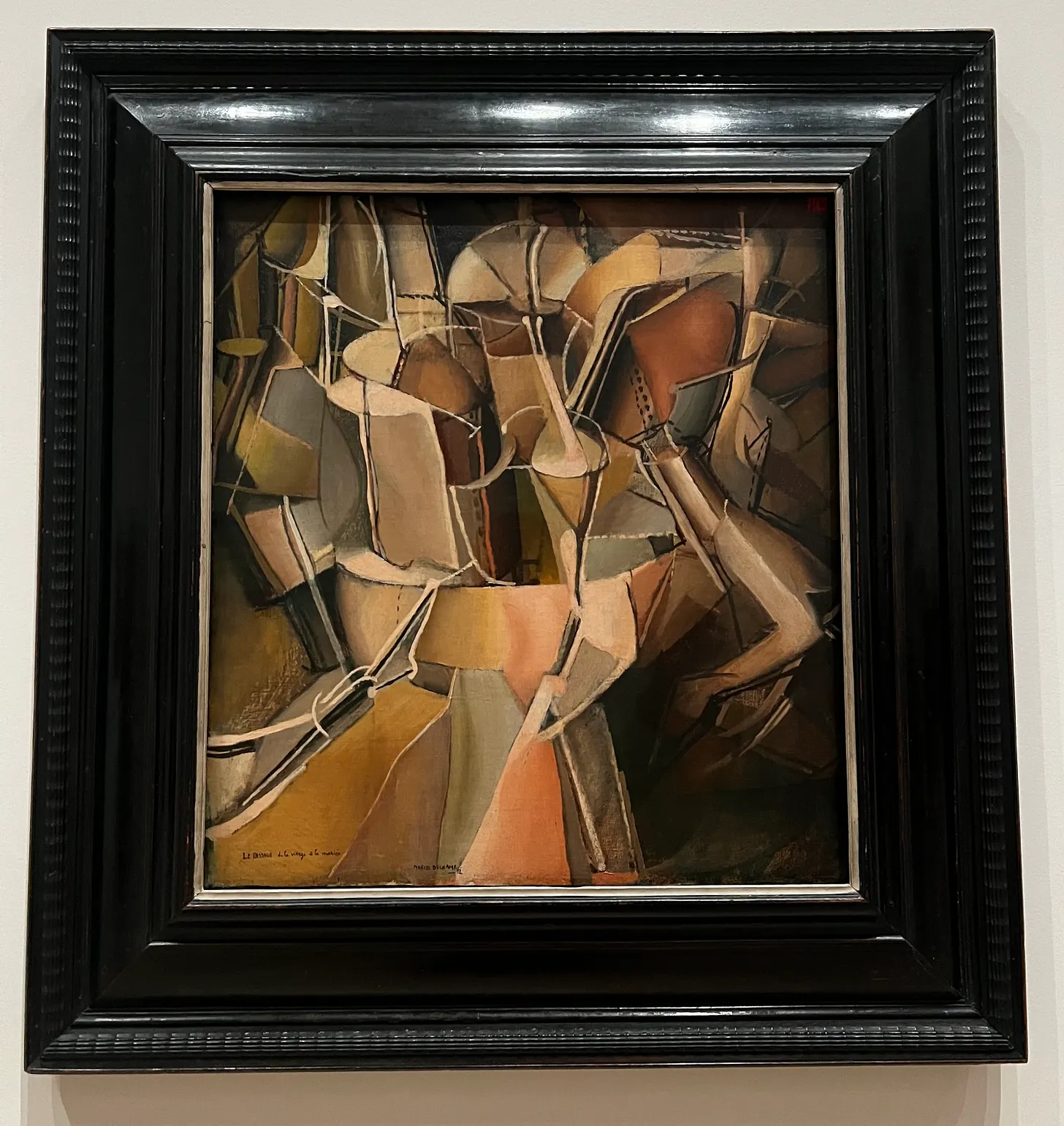
July 28th marked Marcel Duchamp’s 139th birthday. This week’s post is a tribute to him.
I stood in front of this piece for 1 hour and 34 minutes. I went through the exhibit and selected The Passage from Virgin to Bride as my subject for one reason: I did not understand it. I saw no virgin and no bride, nor any figure for that matter. I could not reconcile how this painting, “attacked a whole new problem in art and solved it—to paint the moment of change, change itself” as the depiction stated. It was frustrating. After walking through the exhibit with friends, I returned to the gallery alone at 3PM and set my timer.
For the first few minutes I was uncomfortable, exhausted. I had little motivation to stay for the time I allotted. I did not understand what I was looking at. I felt insecure and incompetent. Though familiar with some of his work, I was not well acquainted with Duchamp.
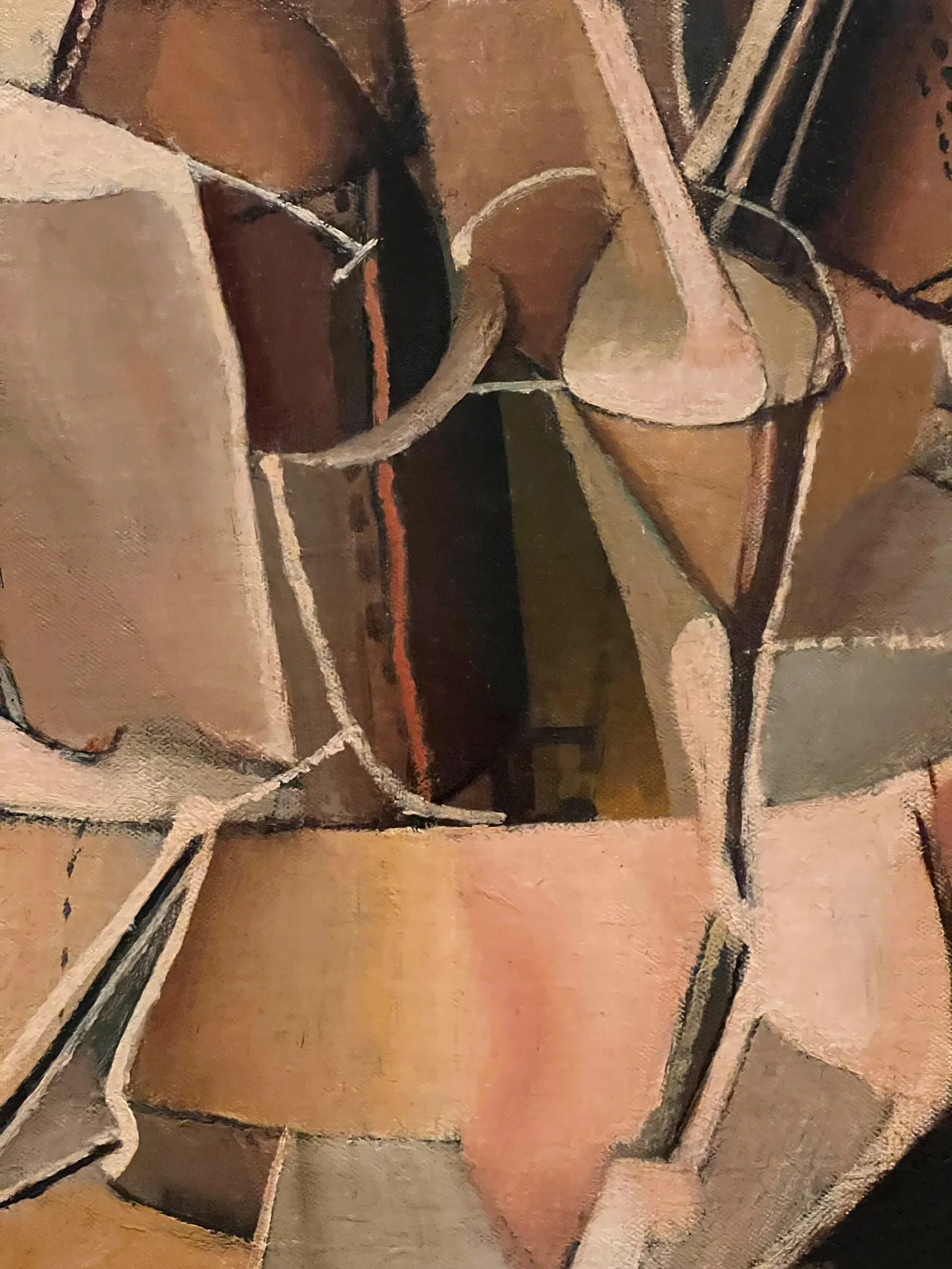
The first 20 minutes passed quickly. I let my eyes wander. They were first drawn to the pinks of the planar surfaces. The palette of flesh. It felt intimate and vulnerable. Three intersecting lines with a small dot in the middle became an eye, and a triangular form a nose. I saw two halves of the painting, one the virgin, the other the bride. This interpretation was influenced by Pablo Picasso’s Head of a Woman (Fernande), which, on view at the Art Institute of Chicago, I had seen many times. Cubist artists like Picasso also heavily influenced Duchamp’s earlier works, so I found the connection plausible.
The shadowed hole in the middle drew my eyes to the center. I resisted the urge by intentionally looking at each quadrant—the dark lower right, and the stacks in the upper left.
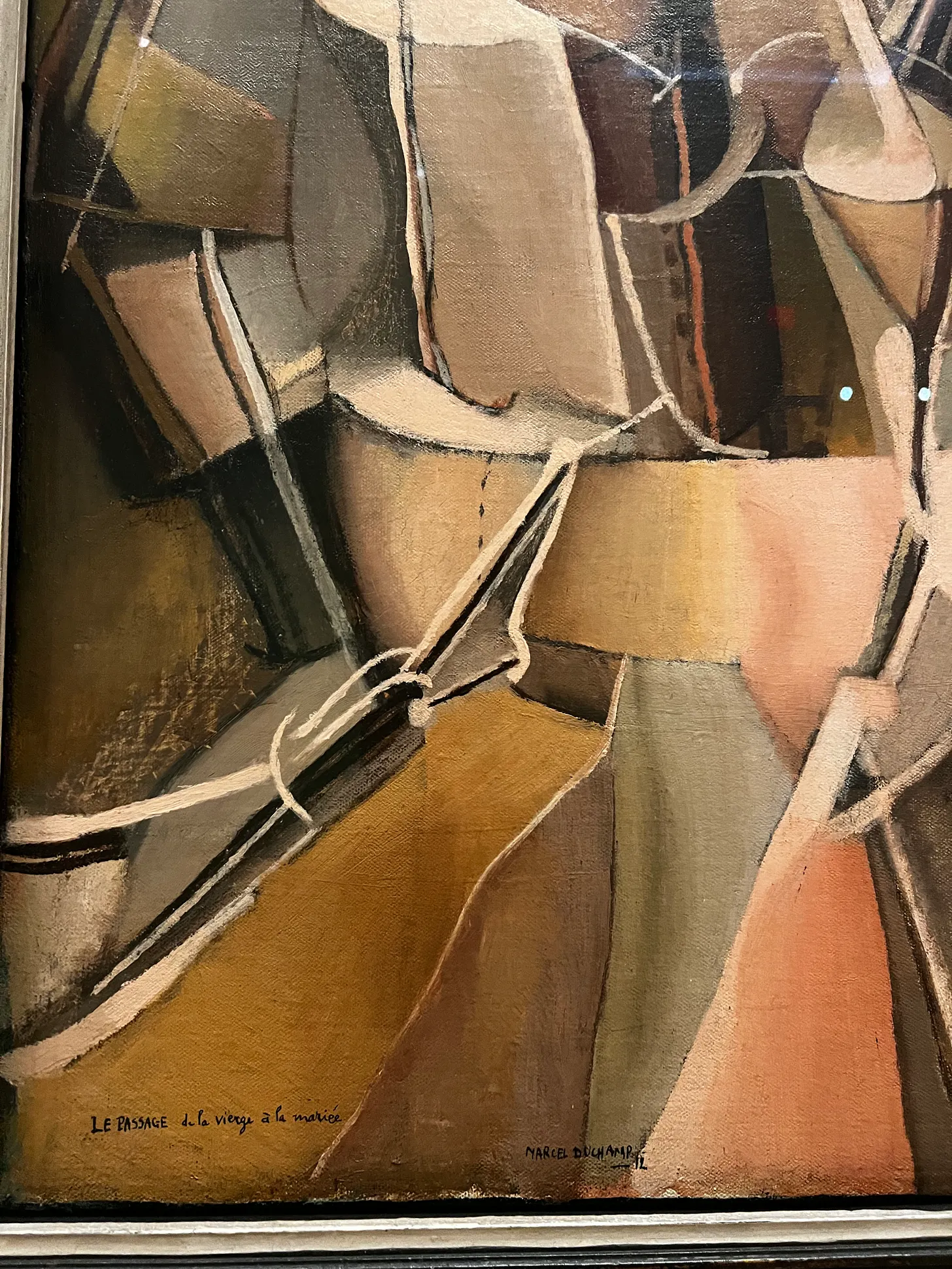
The thin light pink lines called to me, and I traced them around the piece. The form created by the intersection of these lines in the lower left corner appeared hand-like, pulling and grasping at the larger form in the middle. The tubular form mirrored that of the hand.
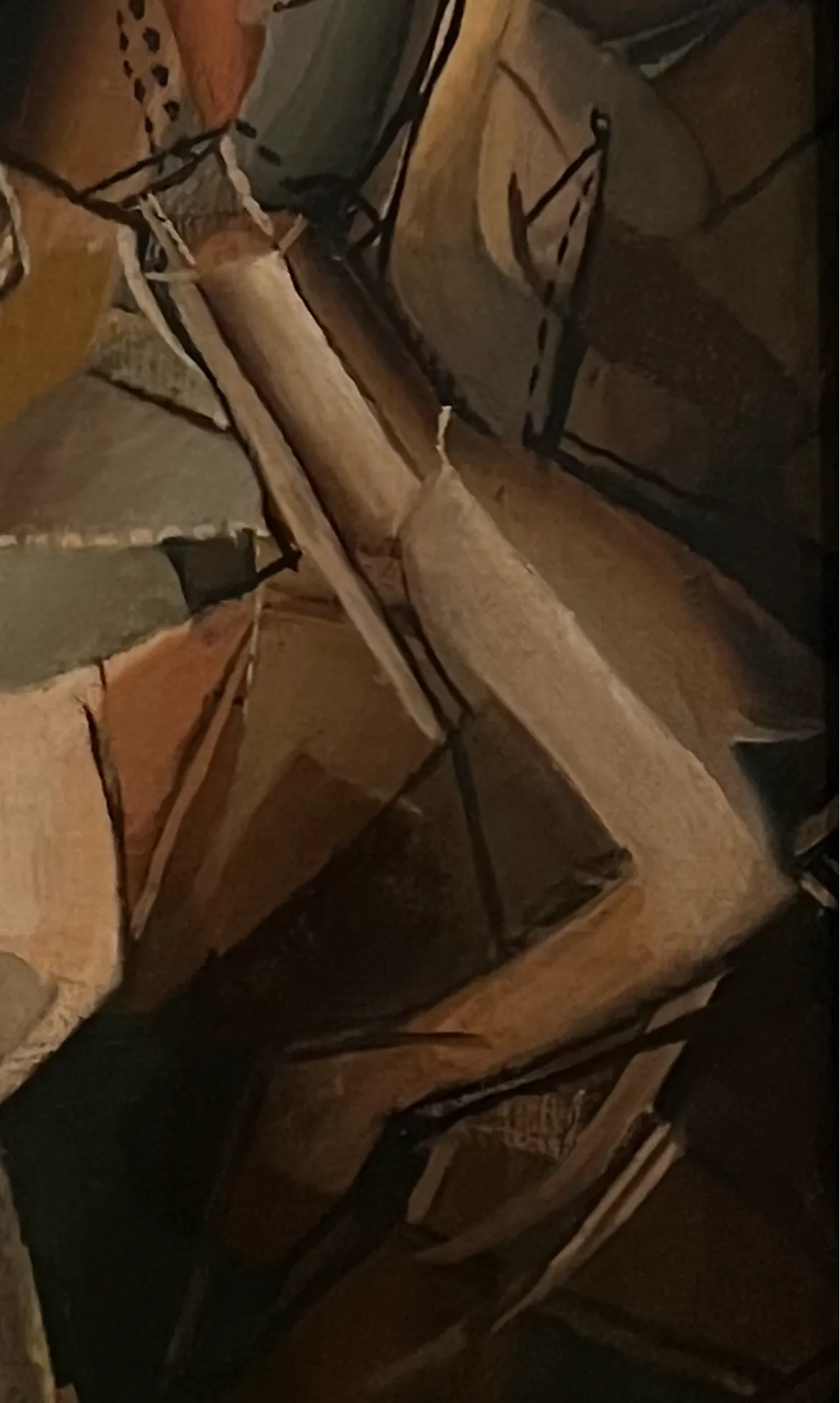
A highlighted grey triangle in the lower right of the painting created a form that conjured images of a bent arm. Of a body kneeling down and pushing something under the larger mass.
After 45 minutes, I no longer wanted to leave nor look anywhere else. The painting became my world. At the hour mark, I overheard the conversation of a woman explaining the neighboring painting Bride to a polished couple. She pointed out the bride in the upper quadrant.
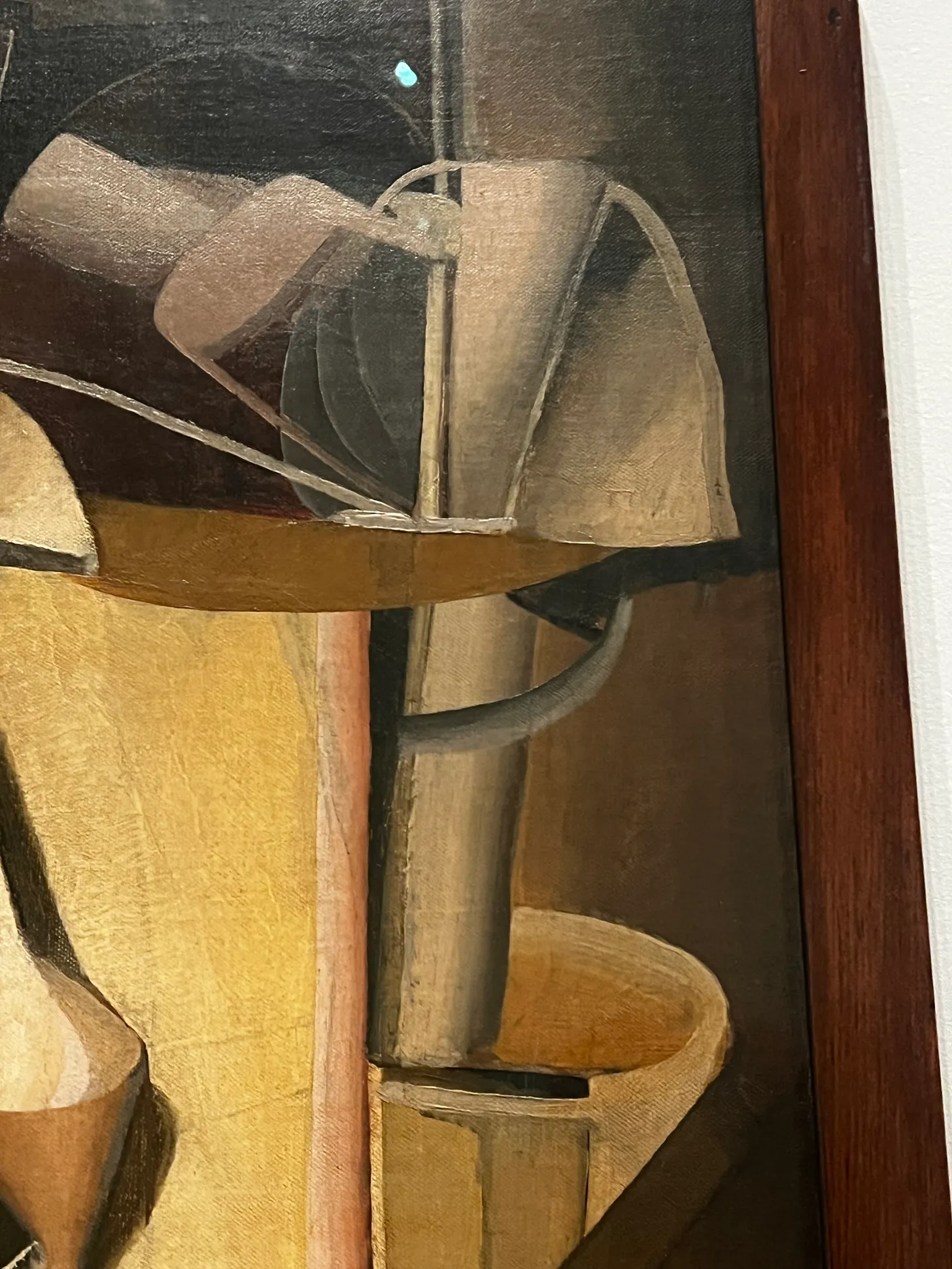
I was shocked. She was so small. Insignificant. She did not occupy the whole painting. The rest, she pointed, were the bachelors. The bride fuels the engine of desire.
I identified a similar structure in The Passage from Virgin to Bride. My interpretation was not what Duchamp intended to depict. When the woman walked across the gallery after incessant talking, I cut over and asked her which half of the painting was the virgin and which half the bride. A look of confusion, scorn, and pity crossed her face. “Neither. The virgin is the bride and she is at the top. The bachelors are on the bottom.” She muttered and quickly walked away.
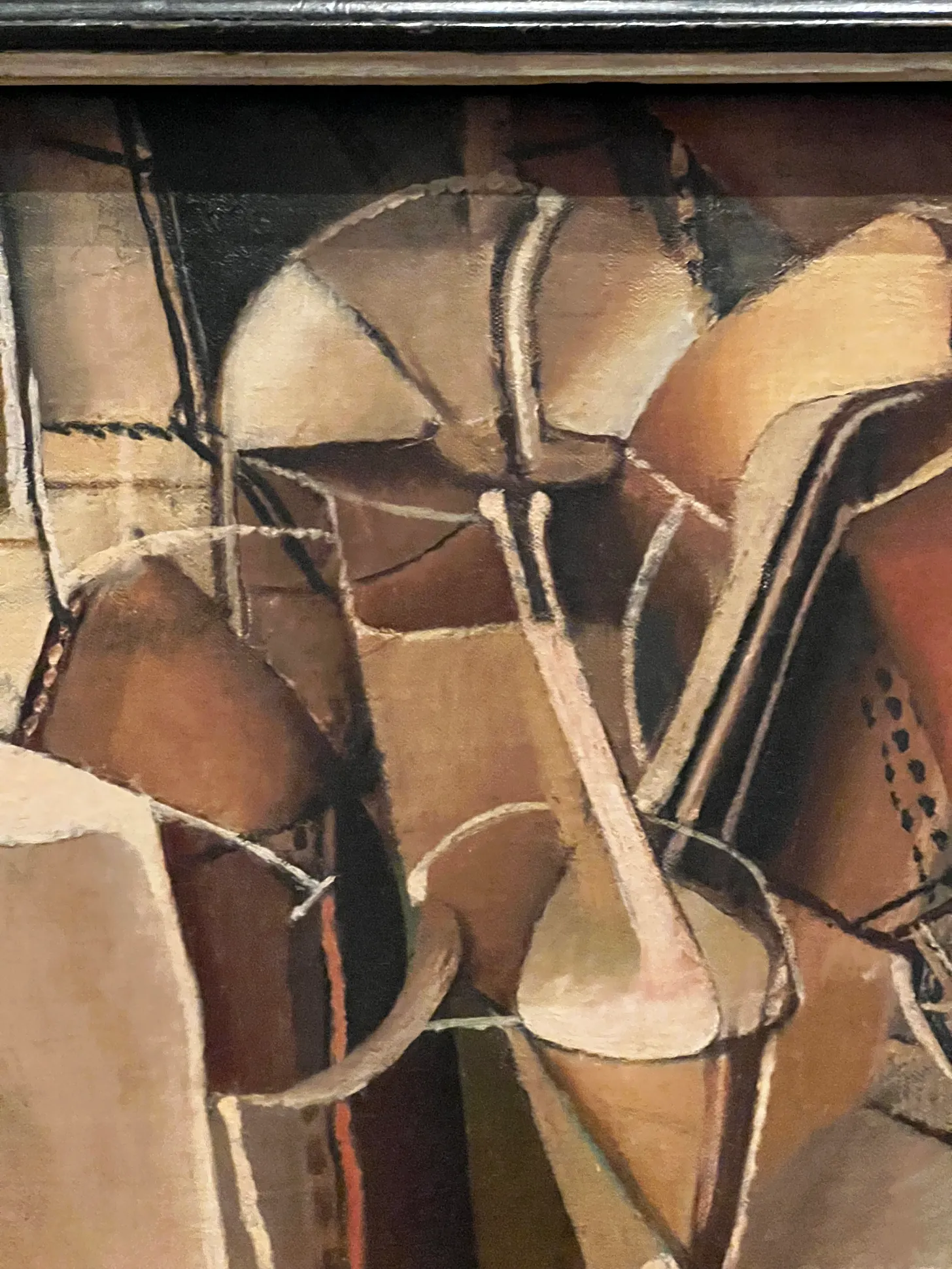
I returned to the painting. I identified what I presumed to be the bride. A deluge of thought flooded me. The painting was realized at the end of Duchamp’s time in Munich where he no doubt witnessed the rapid industrialization of Germany. Duchamp grappled with the substitution of machine for man in much of his work. He, for example, proclaimed a mass-produced bottlerack to be a work of art. It was his selection of the piece that made it art, not the means by which it was produced. He worked through this question here too. Man becoming machine.
A label on the wall explained how Duchamp’s notes call the bride a motor. Man’s desire for her supplies “love gasoline”, which fuels the machine.
What does it feel like to be the virgin? To be stripped and ravaged by bachelors. What does it mean to transition from a virgin to a bride? To go from purity to property. Inevitable, but perhaps undesired. Subject to the machine of man. Always needing more. The desire to seduce. Woman is at the heart of this engine. She creates the energy. A continuous, pulsating, unceasing energy. But she is small.
It is an innate part of human existence that is most acutely depicted here. Yearning. Lust. Love. So long as there is woman and man, there will be the existence of these forces. Forever churning.
Painting Location: MoMA
Location Seen: MoMA
Time Spent with the Work: 1 hour 34 minutes
Exhibit: Marcel Duchamp: MoMA, April 12—August 22, 2026
First published on Substack, August 3, 2026.