The Odyssey, Christopher Nolan et al.
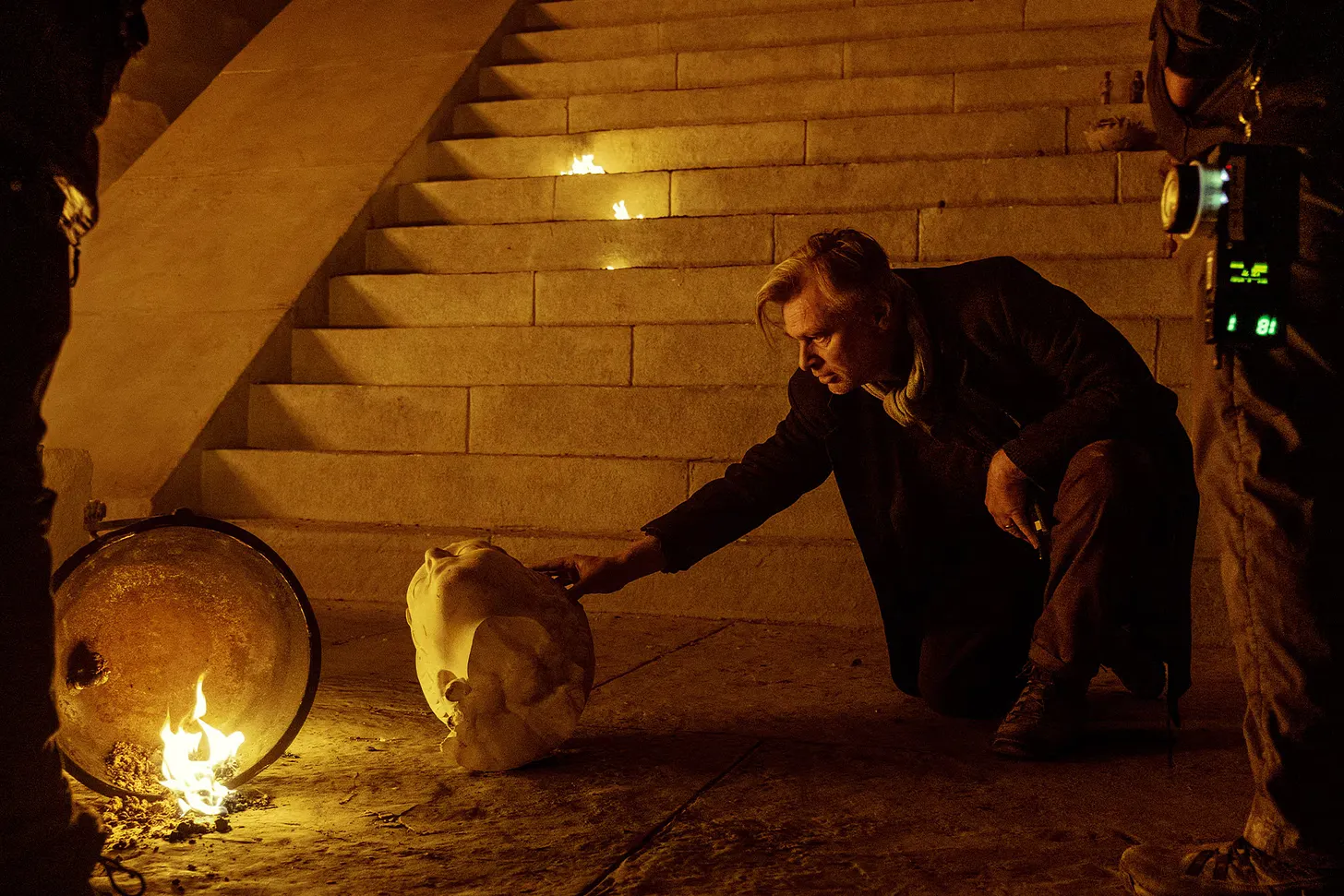
Every generation needs its Odyssey. Though faced with an audience predominately ignorant of the classics, Nolan managed to animate certain truths from the epic’s lines. These are a few that stuck with me.
Nolan clearly reveals how goddesses and gods are raw, universal, inescapable emotion. Emotions reach beyond any one human body. When we feel, we experience something so acute it must be governed by a force beyond the self. The Greeks personified emotions as goddesses/gods, because the human body is the most accessible, known form to which we have access. Emotion is not essence, it is human, possessing our same faults and desires. Portrayals of goddesses/gods serve as reminders of the nearly indescribable forces which govern our bodies and our world.
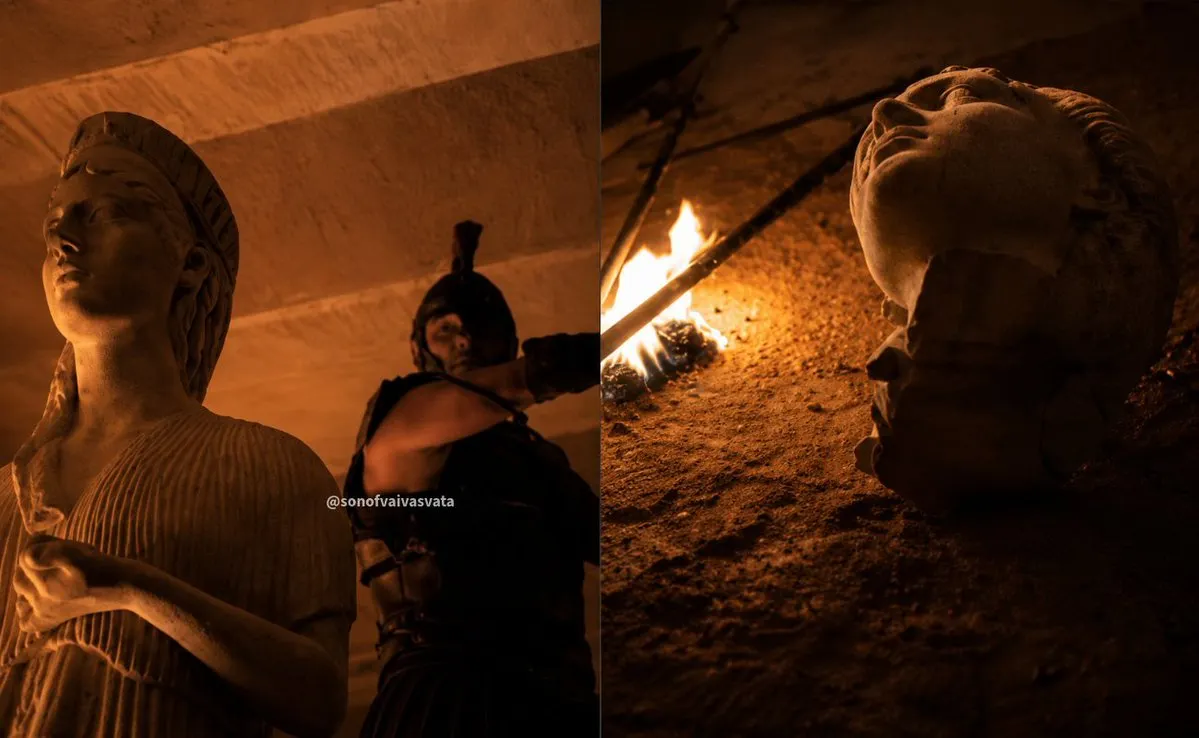
The Greeks realize their ultimate sacrilege by decapitating Athena’s statue in Troy and murdering the temple’s priestess (Zendaya), who then personifies the goddess herself. The cut of the shot between their beheadings establishes this relation. Odysseus holds eye contact with the priestess as she is beheaded. He recognizes her innocence and his own complicity but does not stop the assault. This desecration condemns his journey home to years of toil. It directly “offends” the goddess Athena, which is to say it goes against the wisdom and strategic warfare she embodies. Athena assumes the form of the priestess and accompanies Odysseus throughout his journey. She serves as a specter of his supreme sin: the taking of an innocent life.
For Nolan, Odysseus’s toil is as much mental as it is physical. Perhaps it is all mental, each trial representing the overcoming of a core human vice. Aeolus and the Laestrygonians as wrath. Circe as gluttony. Polyphemus as pride. The sirens as lust. The Cattle of Helios as greed.
Giving in to vice, comes with the yearning to forget, as we see on the island of Ogygia with Calypso. Odysseus gorges on the petals of the lotus (flower of forgetting), ravenous with the need to forget. He so desperately devours to cleanse his mind of the wrath and sacrifice of his journey, and the pain of separation from the ones he loves. In a way, this modernizes Nolan’s view of the epic. It becomes a tale of longing for erasure, rather than homecoming. We live in an epoch of trauma; we are constantly bombarded with traumas that are not our own through social media and the news. Though we become immune, there exists, more than ever, the want to forget.
Human minds are easily plagued by past action and inaction. There is a sharp desire to wash all that ails the conscious, living mind. The remorse. The pain. The rejection. The loss. The catabasis of mortal travelers to the realm of the dead reveals the allure of the River Lethe, the river which erases all memory of Shades (souls) before rebirth. Memory and forgetting, are divinities, Mnemosyne and Lethe, respectively. Mnemosyne, unlike Lethe, is a mother. The mother of the nine muses. When wo/man serves the nine muses, the daughters of memory, s/he forgets their ills. This is relayed by Hesiod, the poet to first describe the muses:
“…when a singer, the servant of the Muses, chants the glorious deeds of men of old and the blessed gods who inhabit Olympus, at once he forgets his heaviness and remembers not his sorrows at all.” [1]
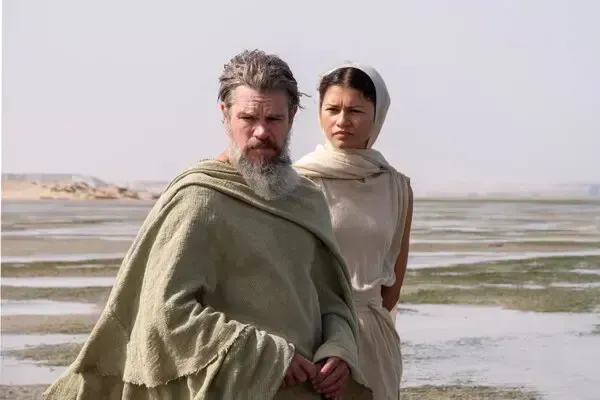
Though memory is a burden, we are nothing but an accumulation of memory. To forget is to surrender the self. In an opening scene in the Odyssey, Odysseus walks with personified Athena on a destitute landscape. A landscape without memory. She reminds Odysseus of the need to remember. Memory is requisite to existence.
In the last scene, Penelope asks Odysseus why they will be remembered in song. He replies, “as a way to remember for those of us who cannot write.” The Odyssey emerged from an oral tradition and circulated through song before it was written down. Its authorship is traditionally attributed to Homer, though the history of its composition remains uncertain. Nolan’s nod to the history of the work, though eye-rollingly on the nose, is sweet.
Location Seen: Regal Cinemas, Cockeysville, MD
Time Spent with the Work: 2 hours 52 minutes
Percent of article written by AI: 0%
[1] Hesiod. The Theogony, ll. 100–103.
First published on Substack, August 24, 2026.